
Lapel pin meaning
A lapel pin says something without words. Depending on the design, it can mean:
- Membership: a club, a company, a fraternity, a union, a professional body
- Achievement: years of service, an award, a qualification, a rank
- Support: a cause, a country, a candidate, a team
- Memory: a person, an event, a place
- Identity: a profession, a faith, a personal symbol
Because it is small and worn close to the heart, a lapel pin tends to signal something the wearer is proud of rather than something they are advertising.
Where the name comes from
The lapel is the folded flap on the front of a jacket below the collar. Many suit jackets have a small buttonhole in the left lapel, originally for a flower (a boutonniere). Lapel pins took over that spot, which is why the left lapel remains the traditional place to wear one. See lapel pin placement.
A short history
Badges and emblems worn on clothing are as old as uniforms and heraldry. In the 19th century, as clubs, fraternal societies and political parties grew, small metal emblems worn on coats became a common way to show belonging. During the 20th century, companies adopted service pins to reward long-serving employees, military and civic organizations standardized pins for rank and service, and political campaigns used pins to show support. Flag lapel pins became especially common in the United States in the 2000s. More recently, enamel pins have become a form of personal expression and art, collected and worn on jackets, bags and hats.
Lapel pin vs enamel pin vs brooch
| Term | Usually means |
|---|---|
| Lapel pin | A small pin (0.5 to 1.25 in.) worn on a jacket lapel; formal or symbolic |
| Enamel pin | Any pin made with colored enamel; often larger, decorative or collectible |
| Brooch | A decorative pin worn as jewelry, usually with a bar pin back |
| Badge | In the UK, any pin or button; in the US, often an ID or police badge |
| Button | A printed paper design under plastic on a round metal back |
Many lapel pins are enamel pins, and many enamel pins are worn on lapels, so the terms overlap. See enamel pins vs buttons for the difference with buttons.
Types of lapel pins
- Hard enamel: polished, smooth and durable, the classic corporate lapel pin
- Soft enamel: bright and textured, popular for events and teams
- Die struck: all metal, no color, traditional for service and membership
- Printed: full-color designs and photos under a clear dome
How lapel pins are used today
At work. Companies give logo pins to staff and years of service pins at milestones. Hospitals, police and fire departments use pins as part of uniforms. See corporate lapel pins.
For causes. Awareness ribbon pins show support for causes from breast cancer research to mental health.
At school. Graduation pins, nursing pins and honor society pins mark achievements.
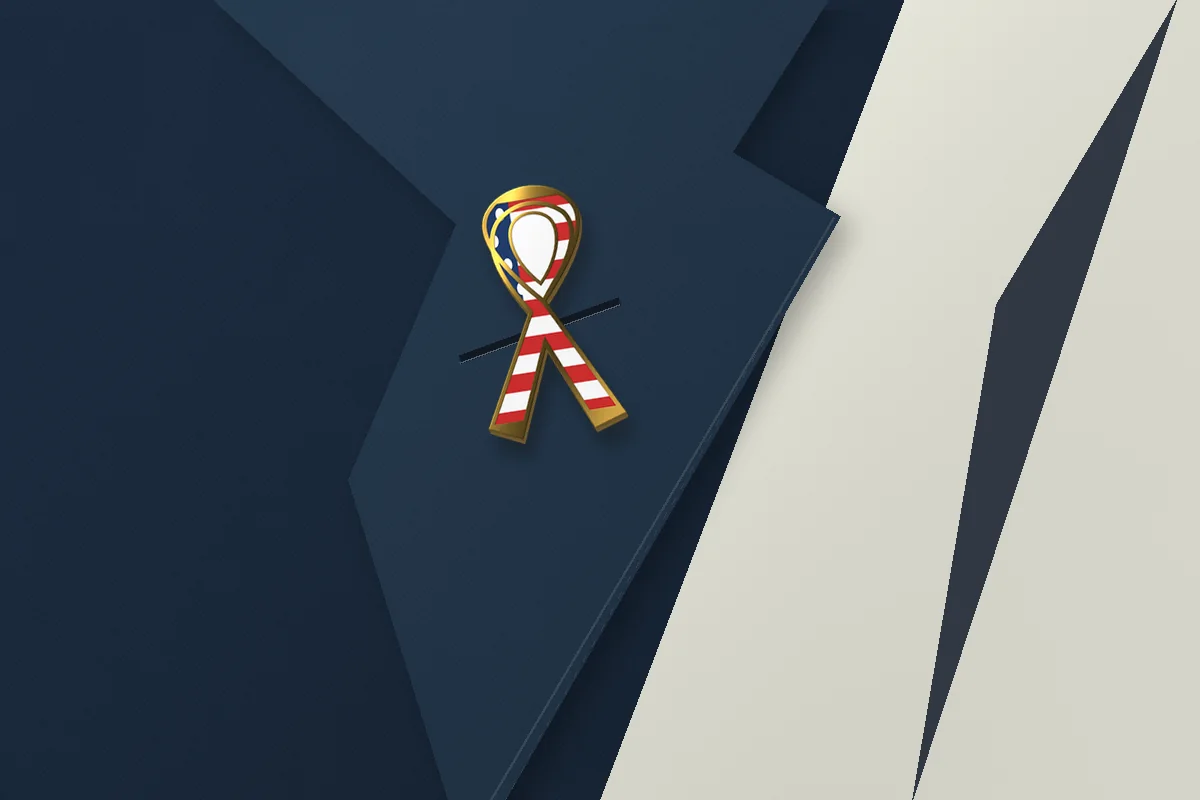
In politics. Campaign pins and flag pins show allegiance.
In sports. Trading pins are traded by players at youth tournaments.
As self-expression. Artists sell enamel pins as wearable art; collectors fill jackets and boards with them.
How to wear a lapel pin
Wear it on the left lapel, near the heart, about where the buttonhole is. Keep it parallel to the edge of the lapel, and wear one pin on a formal jacket rather than several. If you wear a name tag, it goes on the right so people can read it as they shake your hand. Our guide to lapel pin placement has more detail, and lapel pin etiquette covers formal occasions.
Making your own lapel pin
A custom lapel pin starts with your logo or an idea. Most are 0.75 to 1 inch, in hard enamel or die struck metal, with a butterfly clutch. See custom lapel pins for options and prices, or send your design on the quote form for a free proof.
Written by the Enamelore team, who proof every order. Questions about this guide? Email hello@enamelore.com.