On the wall
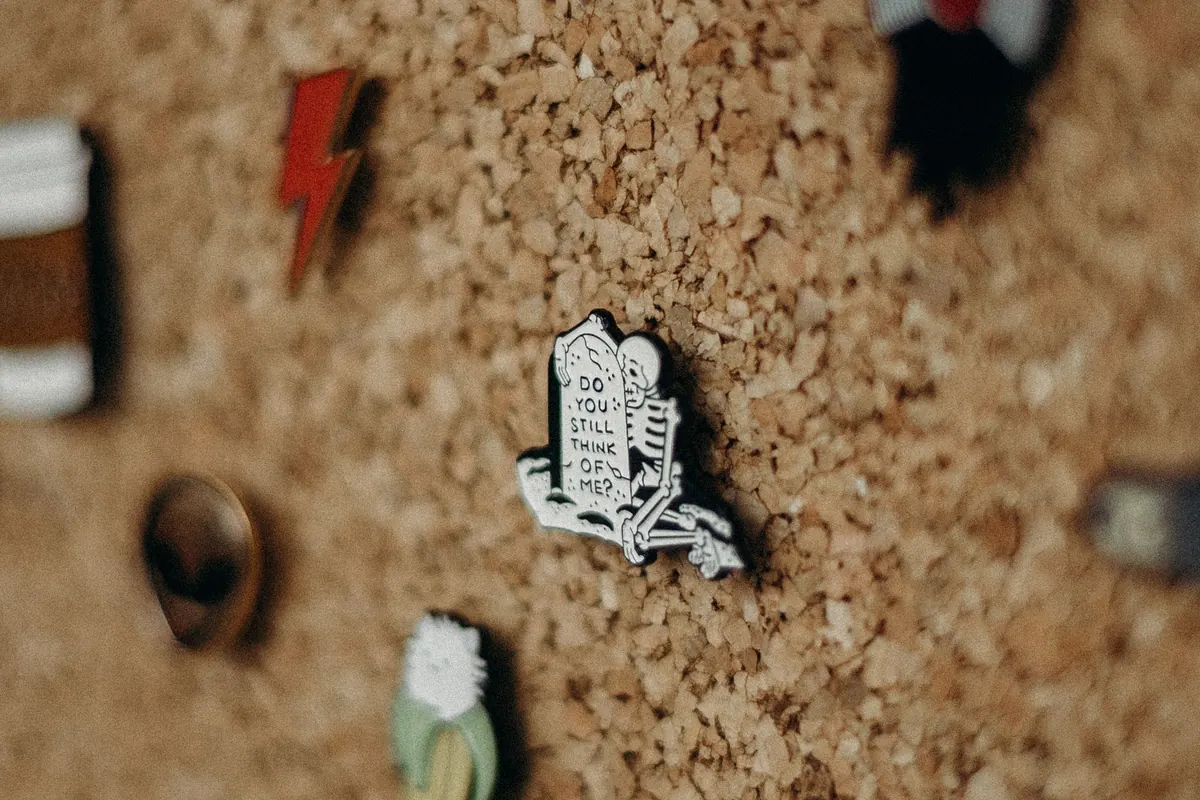
- Cork board. Cheap, easy, and pins go straight in. Paint the frame or wrap the cork in fabric to make it look finished.
- Felt pennant or banner. The most popular display for collectors. Felt holds posts well and hangs on a single hook.
- Shadow box. A deep frame with a fabric-covered backing keeps pins dust-free and looks like art.
- Framed canvas. A blank stretched canvas, painted or covered in fabric, makes a lightweight, large display.
- Foam board in a frame. Foam board is stiffer than cork and takes posts cleanly.
- Pegboard with fabric panels. Combine pins with hooks for hats and lanyards.
- A themed map. Pin each pin where you got it, perfect for travel and trading pins.
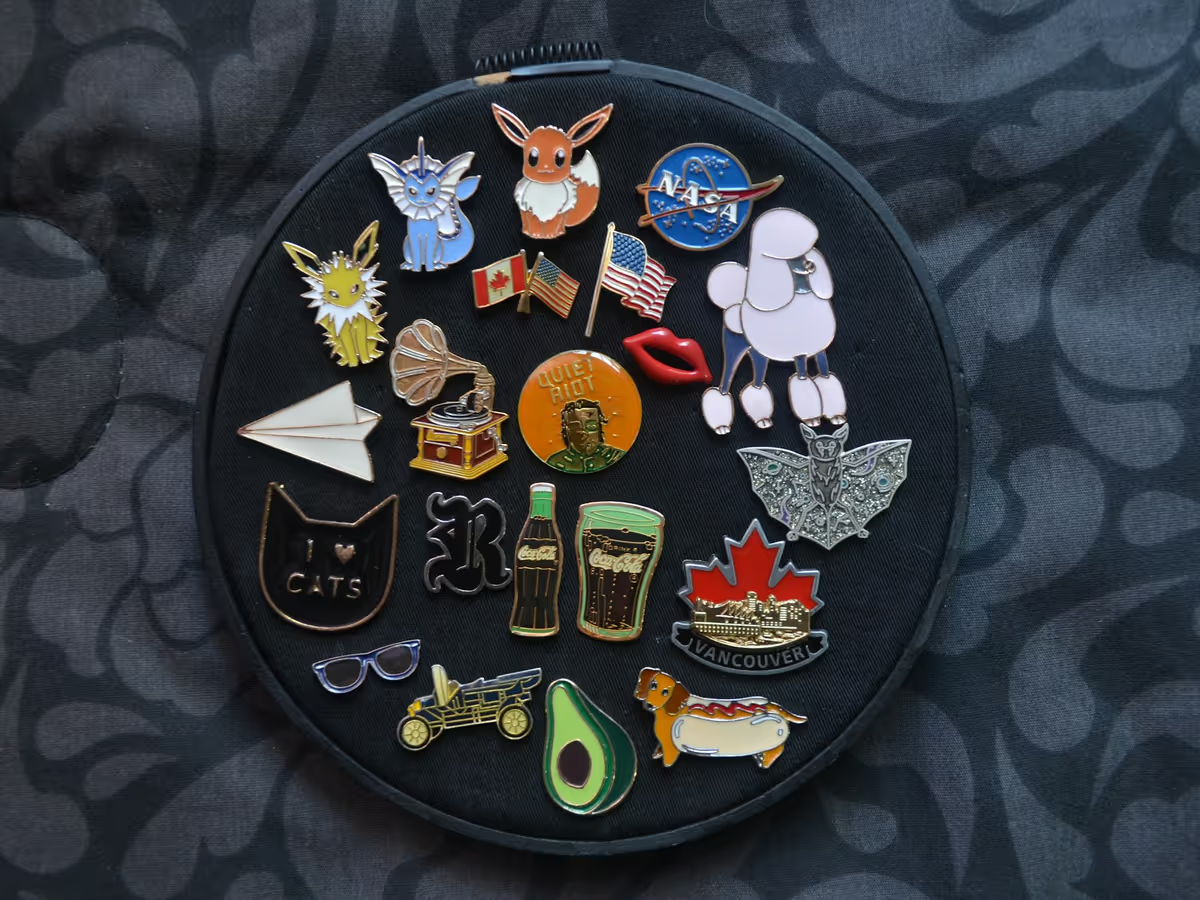
- Embroidery hoops. Stretch fabric in a hoop and arrange a few pins inside; group several hoops on a wall.
- Letter boards. Spell a word with felt letters and add pins around it.
On things you wear
- Denim or canvas jacket. The classic. Start with the lapels and the back panel.
- Backpack straps. Pins on straps are seen constantly; use locking backs.
- Tote bags. Canvas holds pins well; keep heavier pins near the top seam.
- Hats and caps. One or two pins on the side panel. See hat pins.
- Lanyards and badge reels. Popular in hospitals, schools and offices.
- Vests. Traditional for pin traders and collectors at events.
- Ita bags. Bags with a clear window panel designed for showing pins.
For collections you want to move
- Pin books. Albums with felt pages; good for storing and carrying.
- Pin trading towels. Used by youth teams at tournaments. See trading pin display.
- Display cases with lids. Aluminum or wooden cases with foam inserts.
- Pin trading bags. Bags with felt panels inside.
- Lanyard sets. For theme park and event trading.
Creative and themed displays
- Rotating seasonal board. Swap pins by season or holiday.
- Desk display stand. A small felt-covered block or easel for a few favorites.
- Lampshade. Fabric lampshades take pins, and backlight makes translucent enamel glow.
- Curtain tiebacks. A strip of fabric with pins as a tieback.
- Plant pot band. A felt band around a pot, pinned.
- Bookshelf strip. Felt tape along the edge of a shelf.
- Collage under a glass table. Pins under glass on fabric.
- Team or event board. For offices and clubs: a board of every pin the organization has made.
- Gallery frame with labels. Frame each pin with a small label: name, year, where it came from.
Keeping pins safe on display
- Use locking backs on anything that moves: bags, hats, jackets.
- Avoid direct sunlight; it can fade printed pins and some enamel colors over years.
- Keep displays dry; humidity can tarnish plating.
- Do not overcrowd; pins scratch each other when posts are too close.
- Remove pins before washing clothing.
Our enamel pin care guide covers cleaning.
Display ideas for organizations
Companies and teams display pins too: a framed board of every years of service pin in reception, a case of past trading pins at the clubhouse, or a banner of awareness ribbon pins at a fundraising table. A display tells the story of the organization at a glance.
Making pins worth displaying
If you are designing pins that people will want to show off, see how to design an enamel pin. Collectors look for good design, a backstamp and limited editions with numbered backs.
Displays by budget
| Budget | Display | Notes |
|---|---|---|
| Under $10 | Cork tiles or a felt pennant | Holds 20 to 40 pins |
| $10 to $30 | Framed cork board or a pin book | Good for growing collections |
| $30 to $80 | Shadow box or display case | Dust-free, looks like wall art |
| Free | A denim jacket you already own | The original pin display |
How to arrange pins
Group pins by theme, color or the story behind them. Leave a finger's width between pins so posts do not crowd each other. Put the largest or most special pin slightly above center, the place eyes go first. For trading pins, arrange by year or tournament so the board reads like a timeline.
Written by the Enamelore team, who proof every order. Questions about this guide? Email hello@enamelore.com.