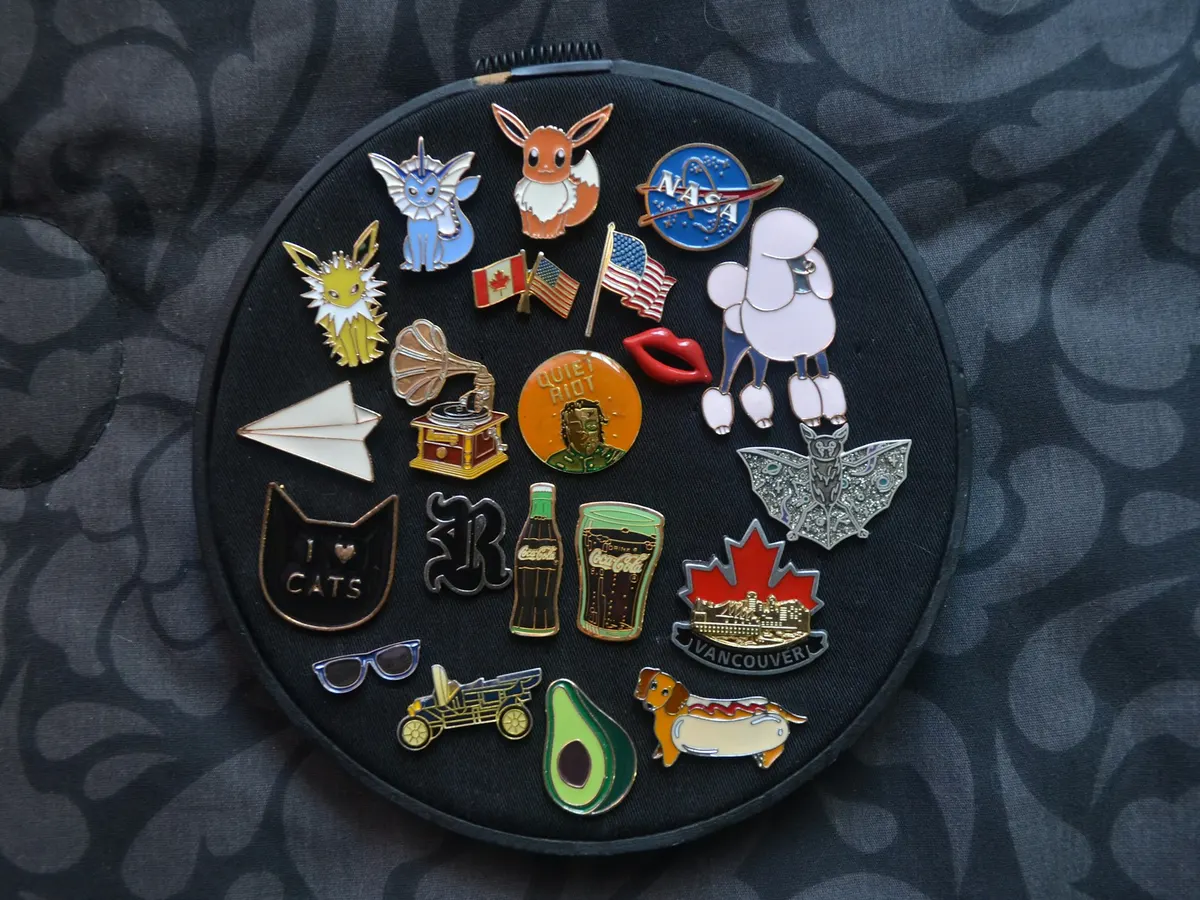
True cloisonné
Cloisonné is an ancient technique: thin metal walls (cloisons) separate areas of powdered glass, which is fired in a kiln at very high temperature until it melts into a hard, glassy surface, then polished. Cloisonné pins are extremely durable, have deep, jewel-like colors, and feel like fine jewelry. They also cost several times more than other enamel pins, the color range is narrower, and very bright or exact brand colors can be hard to match.
Hard enamel (imitation cloisonné)
Most pins sold as hard enamel use a synthetic enamel compound instead of glass. It is filled in layers, baked at a lower temperature and polished flat, giving a smooth surface very close to cloisonné in appearance. It matches Pantone colors closely, costs far less and is durable enough for daily wear. See hard enamel pins.
Comparison
| Item | Cloisonné | Hard enamel |
|---|---|---|
| Enamel | Powdered glass, kiln-fired | Synthetic compound, baked |
| Surface | Glassy, polished | Smooth, polished |
| Colors | Rich but limited range | Wide range, Pantone matched |
| Durability | Exceptional | Excellent |
| Price | Several times higher | About 10% above soft enamel |
Which should you choose?
For almost all pin projects, hard enamel gives the cloisonné look at a practical price. True cloisonné makes sense for high-end awards, heirloom pieces and collectors who want the real technique. Ask about cloisonné on the quote form; for most designs we will recommend hard enamel and explain why. See also soft vs hard enamel.
How to tell them apart
True cloisonné has a glassy look and feels cool and hard, like glass. It usually costs noticeably more and is often marked as cloisonné by the maker. Hard enamel pins look very similar but feel slightly warmer and are far more common. If a seller offers "cloisonné" pins at hard enamel prices, they are almost certainly hard enamel (imitation cloisonné), which is fine as long as you know what you are buying.
Colors in cloisonné
Because cloisonné uses colored glass, some colors are difficult or impossible: very bright neons, exact brand pinks and some pastels. Hard enamel is mixed to Pantone, so it matches brand colors more accurately.
Written by the Enamelore team, who proof every order. Questions about this guide? Email hello@enamelore.com.