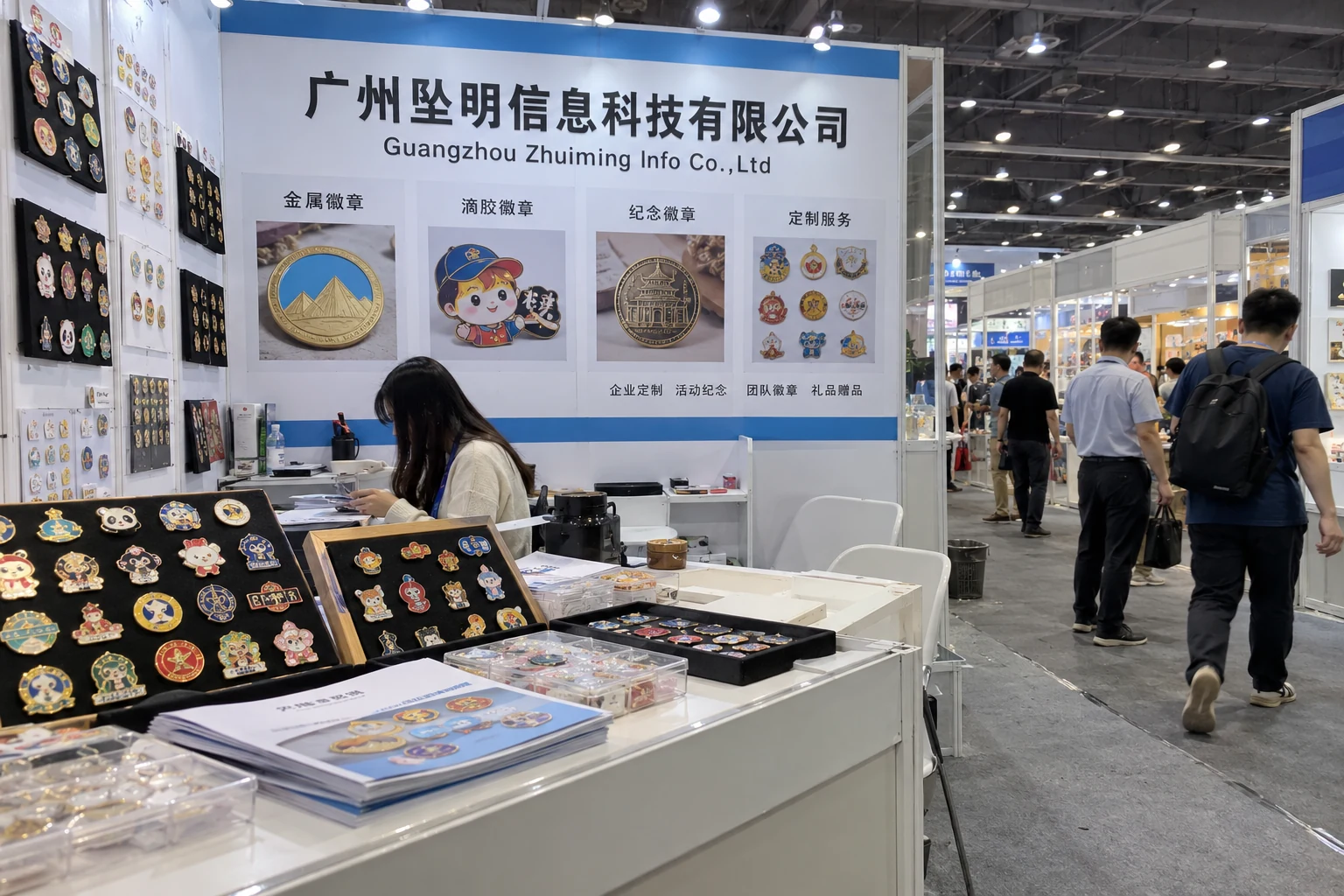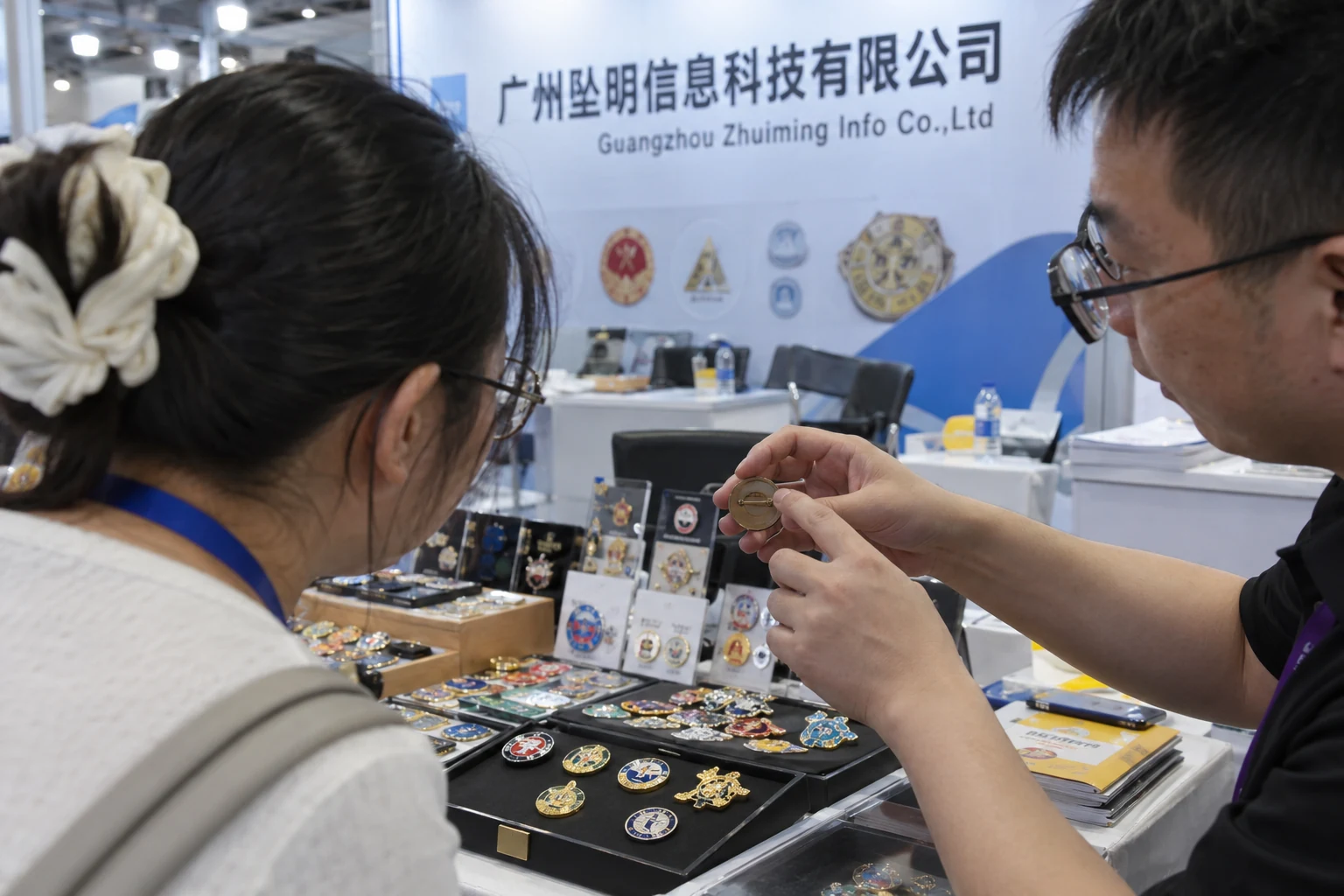
The Guangzhou gift exhibition setting
The Guangzhou Gifts, Cultural & Creative Products and Digitalization Exhibition (广州礼赠品、文创产品及数字化展览会), also listed as the Guangzhou Gift Exhibition, is a trade exhibition covering gift products, cultural and creative merchandise, and digital services. Published listings name the Canton Fair Complex in Pazhou, Guangzhou, as its venue.
That mix is useful context for a custom pin project. Pins can sit alongside presentation boxes, printed cards and other small gifts, making it easier to compare the piece with the way it will be handed over. The questions to bring are practical: which size works, which surface suits the artwork, and what should the recipient notice first?
Give the conversation a clear job
A tray of pins offers plenty to talk about: a pleasing edge, a favorite shade of blue, a shape that feels right. The useful moment comes when those observations become decisions for your own design.
Before the meeting, decide what you want to leave with. It might be an agreed size, a finish direction or a short list of changes for the first proof. Put those decisions at the top of your notes. A sample discussion can then move naturally from looking and handling to choosing what the next drawing should show.
Reference one: the original artwork
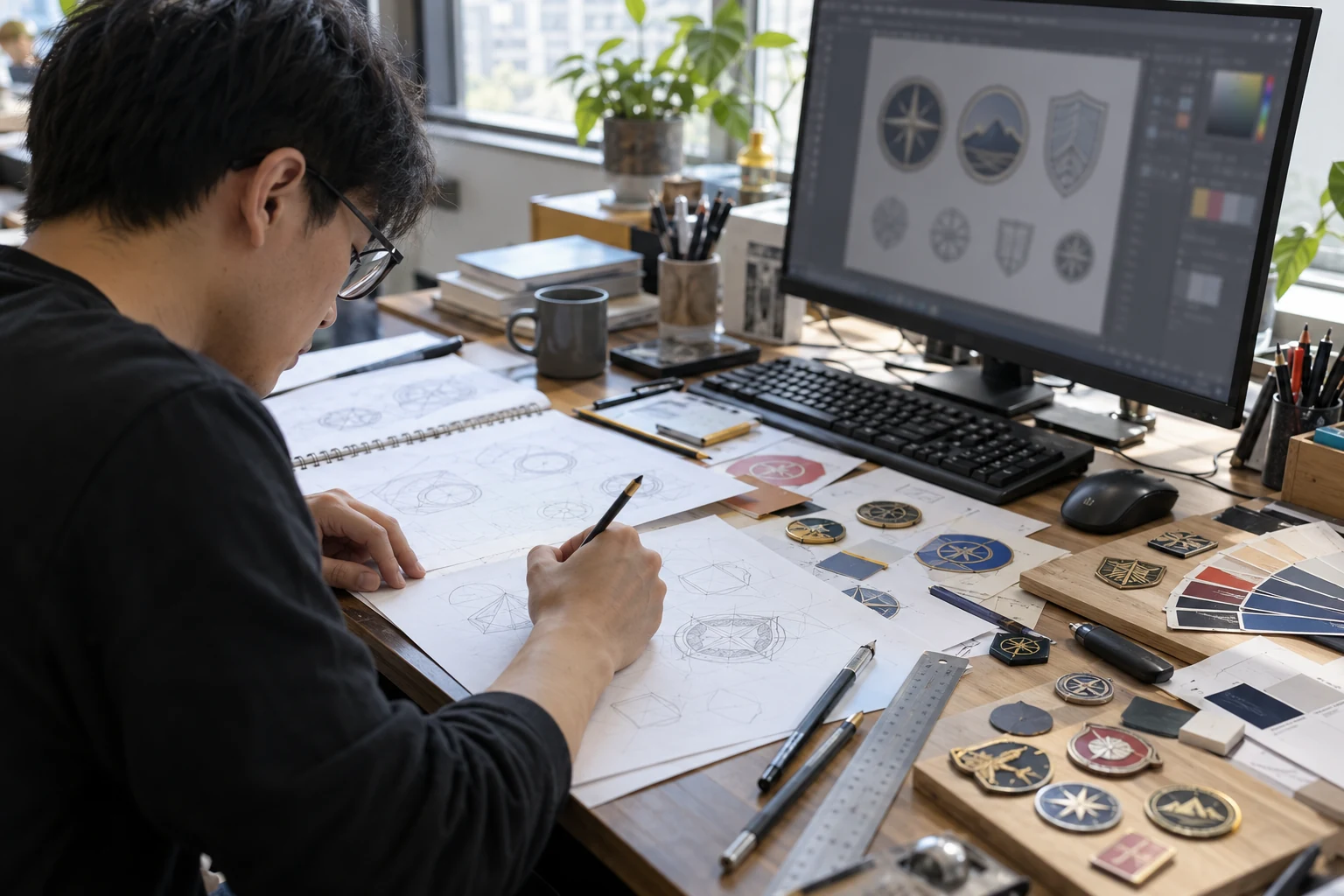
Bring the best version of the logo or illustration you already have. Include the exact wording and any color references used by your organization. A cropped screenshot can help explain an idea, but the original artwork makes it easier to see proportions and small details.
Mark the elements that must stay: perhaps the outline of a crest, the arrangement of a monogram or a particular name. Also identify the details you are happy to simplify. The artwork guidelines explain the file types you can send. If all you have is a sketch, bring that and annotate it clearly.
Reference two: one sample with a clear purpose
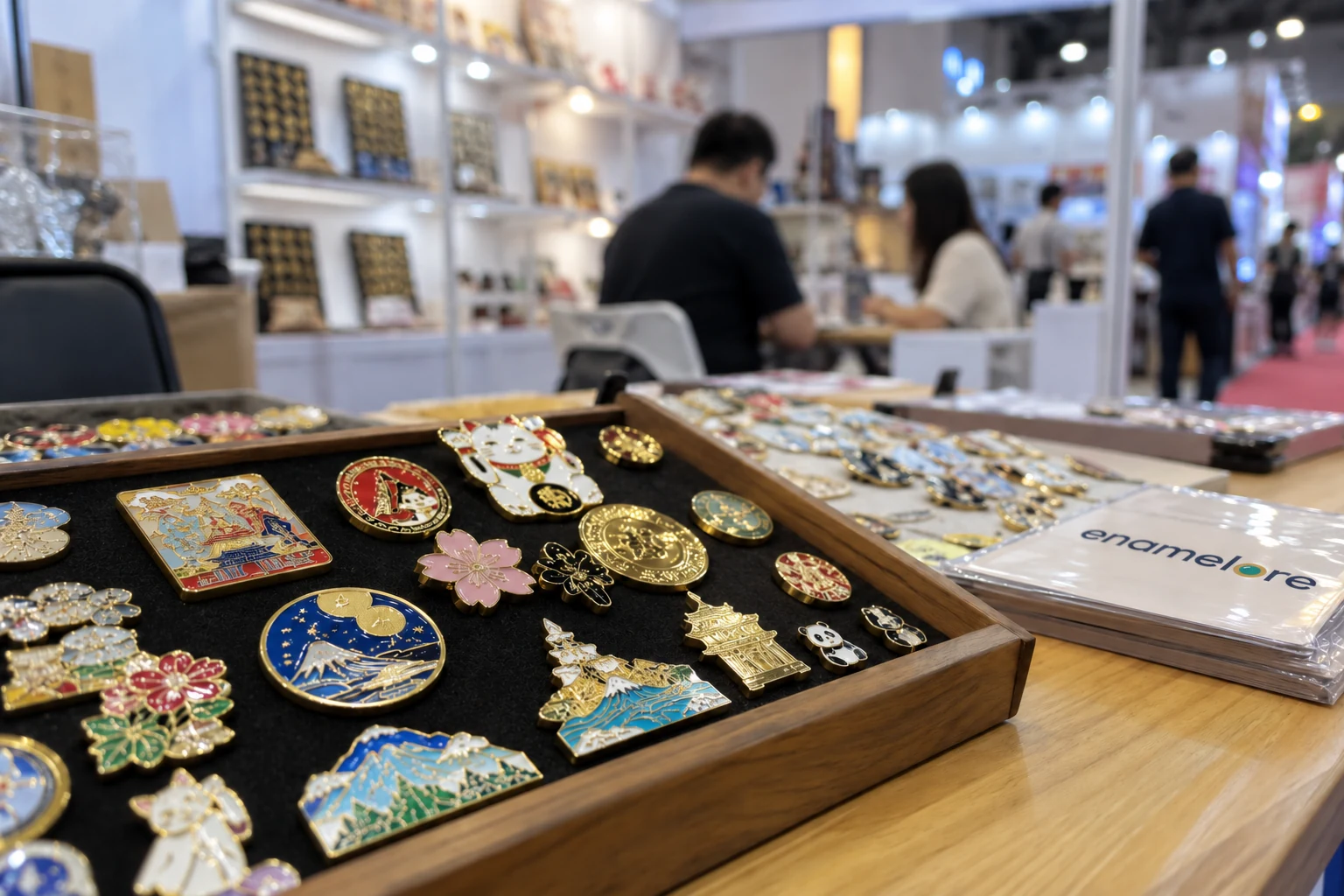
Choose a physical sample because of a feature you want to discuss. It could be its size, surface, edge or attachment. Say which feature matters as soon as you put it on the table. This avoids carrying an unrelated part of the sample into the new design by accident.
If you need two references, give each a separate job: “the size of this one, with a finish closer to this one.” Label them A and B in your photos. Keep your own artwork visible while comparing them so the conversation stays connected to the pin you are making.
Reference three: the place it will be used
Bring a photo of the jacket, lanyard, backing card or presentation box you have in mind. For a ceremony, explain who will hand out the pins and how people will receive them. For a team, show the clothing or display that will sit behind the design.
Those details make abstract choices easier. A pin that looks balanced in isolation might compete with embroidery beside it. A package that looks attractive on a table might take too long to open during a busy handover. The setting gives everyone a practical reason for choosing one option over another.
Separate the essentials from the preferences
Divide your notes into three short groups:
- Keep: the wording, logo elements and dates that must appear correctly.
- Explore: the size, shape, color balance or finish you want to compare.
- Confirm: the quantity, delivery destination, required date and person who will approve the proof.
If several people are contributing, record one agreed request for each point. “Try a larger year” is a usable direction. A long email thread containing several different versions of the year leaves the next person to guess which one is current.
Leave with one brief everyone can recognize
Finish by reading back the decisions against the original artwork. Attach the labelled sample photos, name the current file and list any questions that remain open. Keep the wording compact enough that someone who missed the meeting can follow it.
You can send that brief through our free proof request. A few well-chosen references and clear notes give the design conversation a useful next step: a proof that everyone can review against the same decisions.